Showing posts with label FACTS. Show all posts

Thursday, 22 December 2016

Posted by Howzto
3 comments | 19:21


J.JAYALALITHA the Actor,Administrator,political leader and THE  21st century Cleopatra of Tamil  Nadu

J JAYALALITHA was born in a tamil iyengar family in mysore,Karnataka in february 24th  1948.just an year after india’s independence and also the real independence of many Indian women caught by the disadvantage of being a women In a society were it was looked as a burden and many social evils which mostly affected women.Jayalalittha became the representative of south Indian women aspirations and dreams .  even after her death she has affected the masses by her sudden demise .she began her journey in life in mysore were she was named komalavalli by her parents after her grandmothers name . She did her schooling at a bishop cotton higher secondary school.she did excel at academics and become a school topper in tenth standard board examination .she discontinued her studies at eleventh standard. she had her ambition to become a lawyer  but her destiny had other ideas as she had to enter the film industry accidentally due to pressure from her mother .


JAYALALITHA THE ACTOR had a great film career spanning almost two decades even though she debuted in a kannada movie CHINNADA GOUMBE.she acted mostly in tamil films earning praise from people and filmgoers .Her tamil movies ayirathil oruvan and adimai penn won her recognition and fame in tamil film industry .but her association with MGR and her screen space with him as the leading lady for almost 27 films later proved to be a pathway for her into politics, with the help of the charisma and the screen presence that made her one of the most recognizable and revered stars in the film industry , though there had been many affairs regarding jayalalitha and mgr she acknowledged him as her guide and  rumors posted about them and her association with other male stars, she did rise above them and proved them wrong and that to in her own style .she was bold ,defiant and confident in her approach  and was even admired for her courage by the late mgr himself .
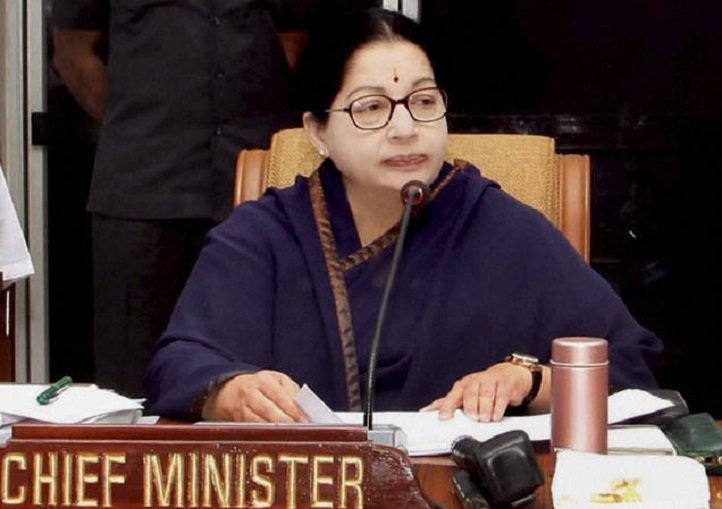

Her entry into politics was not the profession chosen once again by her as she was nominated by her political leader and guru who believed in her education and English speaking skills .hence she was nominated by her leader mgr as a rajya sabha mp .she was again nominated in a post as a propaganda secretary by her mentor in the world Tamil conference in madurai in 1987, but once she was into it she never looked back and also wanted and strived to make a name of herself in whatever field she was thrown into she came back with overwhelming success.her grit and determination to bring back the old strong organization structure of aiadmk when it became a fledgling unit with a split in the party and she came back as an opposition leader in 1989 assembly elections .the incident in which she became a full fledged politician in which her  indomitable spirit was shown to her followers which was due to the incident were her clothes were torn and her hair was pulled by DMK MPs caused public outrage and anguish from people in tamil nadu and add to that the public sympathy of the death of Rajiv Gandhi and her coalition with the congress in 1996  earned her rich dividends politically.she rode herself to power for the first time and then her corruption scandals in her first term in disproportionate assets case , 100 crore big fat wedding of her adopted son , tanci case , etc and her relationship with sasikala and their direct indulgence in her day to day affairs of the government  had  made it  test people’s patience as they showed her the door in the subsequent elections in 1996 by even making her lose her own MLA seat .

       But yes even in her first term a few noteworthy things were done like the all women police station ,free cycles to girls and mass wedding of women below poverty line and their dowry expenses borne by her etc .in which she again proved that she was not only a powerful women leader but also she took keen interests in the welfare of the women and the upliftment and empowerment of women from all classes , rich, poor , castes ,religions, etc. and it did become her core constituency of voters till her last breath.

                       When everyone did write her off , she made an astounding comeback with a electoral victory by stitching together an alliance electorally powerful as she rode to power again to be dismissed due to her earlier corruption scandals as it did haunt her again and again at inconvenient time when she had the people’s mandate  majority or in her critics or political opponents words her followers mandate. Her indecisiveness in going ahead with sacking government employees and their reduction in their salary pay became a political blunder and her party men riots in the Dharmapuri bus firing , Coimbatore riots , by her partymen when she was convicted by the trial court became an united opposition war cry to oust her from power .as the opposition stood strong she used her political wit gained from her past election experiences made sure the DMK government to be formed became a minority in the 2006 assembly elections and add to that the dmk’s sudden populist decisions such a free colour tv ,free gas stove and one rupee rice  elected him to power.

                    
       In  her thid term she created the successful and the most populist scheme of her regime the AMMA brand were AMMA RESTAURANTS,AMMA SALT ,AMMA CEMENT ,AMMA MARKET,AMMA WATER BOTTLE ,AMMA RICE,AMMA THEATRES,AMMA MINI BUSES ETC. it did make it politically relevant by appealing to the poor masses but it also did drain the state economy further after the populist regime of dmk with free tv,free stoves ,etc by the dmk government .the tamil nadu state budget deficit crossed to over 9000 crore  and also the debt burden has crossed over 2 lakh crore . this has severely drained the states economy. And also the Chennai floods in the year 2015 and her governments deep slumber which was its official reaction at that time and her stickers applied in the flood relief materials at the time of emergency were food supplies were in demand caused public tirade which turned towards her .she did manage to scrape through the 2016 assembly elections thanks to her political acumen with the experience of many bitterly fought elections.

She also had her flaws  like her political mentor MGR as she hid her health condition from  her  people who elected her many times as a public figure it was her duty to reveal her status of her health and also even she was unable to control the corruption and riots done by her party men and ministers as she was herself caught in many corruption scandals which did threaten her political career. These were the same blemishes her mentor MGR committed himself with the exception of any direct involvement in corruption or being convicted at that time .but jayalalitha did successfully manage to cling to her image of a messiah in public life and as leader for the downtrodden people.
But she left the people and her party men , followers in the beginning of her term. Her demise is a large vacuum unfilled in national politics. But she was the Cleopatra for the tamil people as she won people with her beauty and gracefulness in films and also she won the people’s heart and admiration by her intelligence and shrewdness in politics  and administration.

ARTICLE BY
S.B.K.Balaji

Friday, 9 December 2016

Posted by Howzto
4 comments | 17:56


Today, being happy at work is no longer a luxury. It is a necessity! Everyone wants to find a job they love, be happy at work, and create a great workplace. Can we create workplaces where happiness is the norm, not the exception? The answer is a resounding YES.

Why is Happiness important?
The Organization offers the opportunity to celebrate and harness our intellectual capabilities while creating economic benefits for ourselves, our customers and society. Our minds work better while we are happier and at peace.
This is substantiated by an abundance of research that increasingly points to the fact that happy people are ‘better workers’. Happy employees are more sensitive to opportunities in the work environment, more outgoing and helpful to co-workers, and more optimistic and confident all of which are positive features for the organization. It has also been found that in order to have happy, satisfied and loyal customers; organizations should have happy, satisfied and loyal employees. Even with teams that do not have direct contact with customers, there was a positive association between how employees feel and customer attitudes.

Culture of Happiness Evangelism
With a simple, yet, lofty mission of “Happiest People . Happiest Customers”, Happiest Minds, a digital transformation company, focuses on the twin themes of disruptive technologies and people happiness. Our name reflects our mission and is indicative of the culture that we are building,
Happiest Minds is a pioneer in the creation of the role of a Happiness Evangelist, someone whose role is to sensitize each Happiest Mind to the Happiness Agenda; synthesize the tenets of happiness into organizational practices; and assess the effectiveness of people practices through Happ’o’meters.

Who then is a Happiness Evangelist?
A Happiness Evangelist is one who: looks for opportunities to appreciate others genuinely; listens with empathy; strives to increase harmony and collaboration; is polite and courteous; displays kindness & concern for others; is willing to help others; encourages new thoughts and ideas, even if they are not aligned with his/ her own; is willing to share knowledge; cultivates the culture of WE instead of I; dis¬plays calmness in challenging situations; Goes the extra mile to keep the customer (internal/external) happy; and has a high commitment to results.
The three C’s will helping enabling happiness in work place:
Cultivate a sense of meaning and purpose - Rosabeth Kanter, Professor, Harvard University wrote that people want to work for companies where they feel they are making a meaningful difference in the world. People want to feel as if their work matters, and that their contributions help to achieve something really important. People who believe in what they are doing are happier, more motivated, and more productive.


Create a collaborative community - Community at Happiest Minds fosters a work environment that encourages mutual respect and sensitivity. You like the community and the community likes you. This creates a sense of belongingness, respect and pride - which leads to employees taking on more responsibility. Close, trusting and supportive relationships are hugely important to one’s state of mind and their willingness contribute to a team.

Capacity to make choices - People like to have a say in shaping their workday and controlling their own destiny. “We found that knowledge work¬ers whose companies allow them to help decide when, where, and how they work were more likely to be satisfied with their jobs, performed better, and viewed their company as more innovative than competitors that didn’t offer such choices,” wrote Diane Hoskins in the Harvard Business Review.

The impact of happy employees on an organization is dramatic. We need organizations that create satisfied and happy employees who can help create resilient companies - ones that can withstand the challenges of an ever changing, increasingly competitive marketplace.


Thursday, 8 December 2016

Posted by Howzto
No comments | 17:48


BREXIT - > Britain exist from EU
Results were released on 24 June.
• 52 % opted for Leaving EU
• 48 % opted to stay

What may happen if Britain stays with EU?
They will have good support from rest of the countries in the European un¬ion for the security
Since Britain is a small country in terms of both size and population (less than8.5million)they need all the support to be global giant
What are the advantages of leaving the EU?
Britain pays a large membership fee to be a part of EU, that can be avoided They can reframe immigration rules and stop eastern Europeans from working in Britain

Effects of BREXIT:
Britain can frame new workers policy and can reduce the money which they spend for immigrant workers.
Free trade agreements will be hard Investment in Britain from foreigners will reduce Inflation will increase

Effects on India:
Jobs and education opportunities will be limited for Indians as laws and rules will be strict
India can have direct Trade agreements with UK
Indian companies cant penetrate the euro market by establishing their business
in UK .

When Indian markets began trading that Monday, they had to factor-in the pact of Rexit: the Reserve Bank of India Governor Raghuram Rajan's exit from the central bank once his term finishes in September. However, a much bigger event, the referendum on Britain's membership of the European Union (EU), which resulted in its exit from the EU—Brexit—spooked the markets. The Sensex opened lower by 635 points and went down by 1,091 points before bottom fishing brought some stabil¬ity. Even as the index recovered 486 points from the day's low, it still closed the day with a deep cut of 605 points or 2.24%.

The debt market, which reacted negatively to Rexit, with 10-year bond yields spiking on Monday morning (markets, however, recovered the same day) remained relatively calm on Brexit. However, the currency market took a beating and the rupee lost on both Monday and Friday and ended the week with a loss of 89 paisa against the US dollar.
The biggest worry about the Brexit vote is that it has opened a Pandora's Box. Emboldened by the Brexit outcome, groups opposed to the EU membership in other European countries have already started demanding their own referendums. The im¬mediate impact of Brexit is an increase in risk aversion when it comes to investing.
"Risk aversion is likely to take hold across asset classes," says Michael Strobaek, Global Chief Investment Officer, Credit Suisse. The first hint of this was seen when crude oil fell while gold rallied 5% each.

Among the global currencies, only the Japanese yen and the US dollar appreci¬ated (considered as safe currencies by the market). Currency deprecia¬tion will further increase risk aver¬sion and put more pressure on the weak Asian currencies.
"Asian currencies, excluding Japan, could be hurt if other EU countries follow suit and call for a referendum," says a recently re¬leased DBS report. The Indian rupee won't suffer much but won't be left unscathed. "The direct trade impact (on the rupee) is limited from UK, but global risk will likely weigh on India in the near term. So we revise our 2016-17 average US dollar target to Rs 68.5 from Rs 67.9," says the Kotak Economy Report.

Tuesday, 5 April 2016

Posted by Howzto
No comments | 23:00
WhatsApp End-to-End Encryption:
Good news for the world's 1 billion WhatsApp users The company has started rolling out end to end encryption which will reportedly be the default setting for all chats.The update comes at a time when governments are attempting to force tech companies, such as Apple to hack their own systems to provide information on terrorist attacks and networks etc. WhatsApp's users now know that their chats, group chats,attachments, voice notes, and voice calls are private.

For the encryption WhatApp uses Whisper Systems' "Signal Protocol" which is an open source private messaging system supported by NSA whistle-blower Edward Snowden. The encryption will work on all Android, iPhone, Windows mobile decides, plus some Nokia and BlackBerry models. 

The security is so comprehensive that users can see the content that has been sent to them, but service providers, including WhatsApp are unable to access message content.
Users will be automatically upgraded to the new version of WhatsApp via a server upgrade.

Sunday, 20 March 2016

Posted by Howzto
No comments | 17:34

Here are some of the pre-game tweets from fans for the big game, India vs Pakistan:

🐦@narendramodi Congratulations Team India for the amazing victory. #IndvsPak

🐦@filmykiida @SrBachchan waving the flag, @sachin_rt smiling and @juniorbachchan cheering! They added charm to the #IndvsPak match! 😍💜

‏🐦@bwoyblunder Match reduced to 18 overs a side. Spare a thought for the Pakistani player who spot fixed to bowl a no ball in the 19th/20th over #INDvsPAK

‏🐦@robbieuthappa Gosh, can't wait for the game to begin.. can imagine how pumped up the boys will be. Let's do this boys!! Go India!!

‏🐦@ArvindKjeriwal Arvind Kejriwal Retweeted Shahid Afridi #IndvsPak im with Pak in this game. अदला बदला

‏🐦@RajeshSuryafan Son : Dad, tell me one Universal truth? Dad : Pakistan will lose against India

🐦@ImYokEsH What? 2 overs reduced. They have time to do Celeb presentation but not for the game 😈😈

‏🐦@GabbbarSingh Going by the dignitaries, this match looks like the Filmfare awards for Cricket.

‏🐦@fasiranjha Imran, Wasim and Waqar standing alongside eachother. . The world feared them, the world respected them, they made us all proud! #IndvsPak

‏🐦@MichaelVaughan Cannot wait for this tonight .. #IndvsPak .. Backing @msdhoni has his troops .. Is this the biggest sporting rivalry in world Sport??

‏🐦@abdullah_0mar Conspiracy by MS Dhoni. He wins the toss & deliberately chooses bowl first so that he can finish the match with Six ~ NDTV #IndvsPak

🐦@ImaanZHazir And Amitabh Bachan is singing theirs... we've already lost #Sorry #IndvsPak

Monday, 14 March 2016

Posted by Howzto
No comments | 20:31

Money makes the world go round. A cheeky line to start what’s gonna come ahead. Many of the people really wonder. WHAT IS MANAGEMENT? HOW MANAGEMENT WORKS? WHY MANAGEMENT? IS MANAGEMENT BORING? WHAT WILL I GAIN IN IT? These are the questions which are often put towards the face of organizational management. Since management plays a vital role in modern world. It brings (or) sparks interest in the young minds. Management is an interesting field where it is capable of practising (or) combining ART, SCIENCE and CRAFT meets a point of new interception of individual skill development. It clearly depends upon Innovation, Imagination and Creativity is main building blocks in the aspect of good management.

                     According to my point of perspective towards management is a tricky and brilliant way of dealing with things (or) people with sportive attitude. Where interpersonal skills are applied interims of minds are used inventory and improvement of business and organization. It invokes creating and implementation of new ideas for the better enhancement of management ethics. But for every relevant manner the management deals with ART and SCIENCE of 40:60 ratio with balancing amount (or) exchange of blows and trades.

                    One of the biggest optimising aspecting facts in management is that it is capable of adapting to any persons unique style and in under any circumstances this valuable point can be HARNESSED. Management has a brighter side in the competitive marketing field by where your skills are put to the test by attracting consumers and by increasing in the quality, production of supply and demand according to the environmental requirement. Trading markets is the CROWN JEWEL of modern management.

                   Many theory’s regarding management where proposed by philosopher’s with respect to their research and development on their view of improving management. Their theory’s where put to the test and their analysis on management has brought many changes and shows how management truly operates and the nature of the management is an independent medium to the will of the user .not every course grants this kind of freedom for the users.

                 Management sparks an interest by comforting the basic requirements of an individual person by the means of bringing them into the comfort zone and satisfying (or) fulfilment of their demands. But its basing is more intriguing than that of the requirements .it mainly focuses on the challenging nature and finds a new possibility for solving problems. Which it satisfies the saying “LIFE IS EITHER A DARING ADVENTURE OR NOTHING AT ALL”. With the art of risk taking skill is developed as an assurance as a safety and calculative measure of decision making “it’s better to be safe than sorry”. 

Another popular question frequently asked in by many professionals WHY MANAGEMENT AFTER ENGINEERING/B.COM/B.SC/VISCOM…..?.answer to it lies in each personal  reasons for shifting of domains where for  every set of questions answer lies in the question .as particular management is flexible in nature and can support any type of field you may be good in core  knowledge but what’s the point in having it if you don’t know to applying  it in a planned manner (or) a more effect way of bringing outcomes   with notable performance change .imagine this engineering +management can bring a new term of management with a balance  of technical and logical intellectual thinking and applying for innovative ways of improvising the economy standards. Or simply to put what engineers know management students are not fond of similarly what managing candidate know engineers have a blind knowledge about it. On the contrary side of view engineering+management have better means of field advantages. This answer follows for every degree graduates for viscom/b.com/b.sc.viscom can create attractive advertising, remodelling, resynthesise and many more b.com /b.sc can have better means of solutions in problem solving.
                   
With enough amount of competitive management can bring lot of difference in the daily basis of life it gives benefits in time management, strategically thinking and good judgment apart from these skills it will bring out once full potential in front of the world. To bring an enticing flame in the field of management love what you do .then success will be at your finger tips. when success comes money aren't a big deal.

We just have discussed about the fascinating nature of management. its just the tip of the ice berg. The management has another face of managing by means of specialization and types. just to make it sure .specialization and types of management are two different things.
  The most popular specialization in management are
1) Management in finance
2) Management in human resource
3) Management in logistics and operations
4) Management in sales and marketing
5) Management in information and technology (IT)
6) Management in rent
                     Each specialization has a fair share of pros and cons but differences apart each specialization follows unique style.

MBA IN LOGISTICS AND OPERATIONS:
It follows new type of supply chain. This will teach you how to drive back-end efficiency. In this past few years there is a particular growth in the field of manufacturing industry. When there is a demand for best quality with faster delivery across continents. as part  of the companies have switch gears and have got  their production and distribution systems redone operations management have undergone an overhaul to suit today’s customer’s demand. If your core knowledge is strong would recommend you to prefer this course
*it mainly focuses on identifying, developing interpreting for practice and innovative approach in manufacturing and supply chain management.

CAREER PROSPECTS:
After earning an MBA in operations, your career opportunities are set to broader. you would easily get opportunities to work in planning and policy making,motivation,evaluation,product development and inventory control.

PAY OFF:
Operations manager can earn anything between Rs.4-12 lakh a year while the figure for senior.

MBA IN HUMAN RESOURCE:
Human resource management, deals with human emotions, recruiting, training, team building, performance updates, employee policy, salary, benefits and increments, employee heal and safety as well as staff amenities. If you've got good people skills and can handle tough situation well, you can go a long way in this field.

MBA IN FINANCE:
Specialization in financial has its focus on management accounting and control, the money market, banking and international finance. It tell us about the various aspects of financial theories, identification of best managerial practices in area and global practice of applications. It is a popular specialization growth prospect in the field is immense.
Careers in banks, financial consultancies and financial institutions. It also deals with consumer and investment banking institutional finance, merchant banking, corporate financing and international finance.
                 According to the survey in 2015 most of the youngsters prefer for financial and HR management due to the compatibility and flexibility in the field of management.


                            Every field of management have fair share of strength and vulnerability. But “ONE MAN’S TRASH IS ANOTHER MAN’S TREASURE “so choose you’re treasure wisely……management could be lot of fun if you allow it to be.

Article by- R.Vikraman

Saturday, 12 March 2016

Posted by Howzto
No comments | 13:48
Start up India


START-UP INDIA
Prime Minister Narendra Modi launched the ambitious "START-UP INDIA" movement to boost digital entrepreneurship at the grass root level. He spelt out the various salient features of the action plan that was unveiled at Vigyan Bhavan in New Delhi.

What is start up?
Early stage in the life cycle of an enterprise where the entrepreneur moves from the idea stage to securing financing ,laying down the basis structure of the business, and initiating operations or trading.

Top ten take away's from PM's speech that cheered the start up in the arena.
1. Tax exemption for start-ups for three years.
2 .Rs.10,000 crore corpus fund to support start-ups.
3. Capital gains tax to be exempted for venture capital investments.
4. 80% reduction in patent registration fee.
5. Government to ensure 90 day window for start-ups to close businesses.
6. Self-certification compliance for start-ups across India.
7. No government inspection for three years for newly formed start-ups
8. New scheme to provide IPR protection to start-ups and new firms.
9. Innovation program to start 5 lakh schools to target 10 lakh children.
10. Government is all set to launch an app to create a platform for interaction with start-ups.

India's economic and reform performance in 2015 has disappointed many. Despite outperforming its BRICS compatriots by being the fastest growing economy in 2015 at 7.5 percent, its 'bright spot' status does not leave room for complacence in 2016.Domestic private investment saw a dip in 2015 and the recent 'Mid-year Economic Analysis' confirm this.
The cause of this stall in private investment is driven by corporate India's complex confusion of over-expansion, debt default and risk aversion in an unfavorable investment environment, and important bills being stalled in parliament.


No economy like ours can grow without domestic private investment. Recovery is possible in 2016 if stalled private corporate investment can be restarted, to add to growth in public investment and private consumption. Start-up India will fill this vacuum as start¬ups and entrepreneurs are a way to create alternate private investment models. Start-up India can potentially be the catalyst to restart private investment flows into the economy. India, today is a hotbed for entrepreneurial activity because of the abundance of new ideas and the opportunities that these offers.
In a survey conducted by local circles, 14 percent of those polled reported that registration and taxation was found to be a serious challenge in starting up. Start-up India should address this complexity and incentives corporate spending into new ventures through fiscal interventions. Providing tax incentives when corporates invest in start-up businesses is an important step. The government's recent announcement to waive the 'seed-funding' tax imposed by the finance act, 2013 if domestic angel investors invest in start-ups, is a positive move. Start-up India should include a comprehensive set of policies for entry and exit of private investment. The implementation of GST legislation will play an important role for start-ups and entrepreneurs, as they can access the large Indian market as one open market without the complex requirements for inter-state trade that makes it difficult for small business.

The corporate insolvency legislation, in particular, is pivotal given the fact that a majority of start-ups fail, marking capital recovery a real worry among investors. Under the current insolvency systems in India, as per the World Bank report, the recovery rate for secured creditors from insolvency proceeding stands at 25.7 cents on the dollar-compared to the 72.3 cents in OECD (Organization for Economic Cooperation and Development) countries. The bankruptcy code proposes to have the corporate insolvency procedure resolved within a period of 180 days, with a fast track 90 day resolution process. It also makes provision for priority among creditors, giving the private investor a real chance at recovering the investment. Start-up India needs this policy for its success.
The last decade have seen a number of new Indian corporates get created on the back of private capital. We are now presented with a similar scenario where new and disruptive technologies, along with private capital, can change the business landscape, where a few intellectuals have monopolized the country's discourse on technology, economy and held growth hostage. Start-up India can bring thousands of entrepreneurs from across India into this discourse and drive the growth of a transformed and diversified economy and do so sustainably.

Article by- M. Poovizhi

Saturday, 5 March 2016

Posted by Howzto
No comments | 20:57
entrepreneurship

In today's flat economy where information is the new money, the access to the means and the resources to fortify and strengthen our ideas is readily available. In the ancient era business was a dream for a common man, it was believed that business can only pass through generations i.e from their father's and grandfather's. But now things are taking a big turn.There has never been a more apt time for ideas to slide into action so quickly . The education, the confidence, the access to internet, foreign investments and the government has been a great boon in supporting the common man to become an entrepreneur. This has given the aam aadmi the confidence to chase a thought without being bogged down by the possibility of meeting with failure despite putting in hard work. Now, Modi's "Make in India "campaign encourage muti-national, as well as domestic companies to manufacture their products in India.

The initiative hopes to attract capital and technological investment in India. In a society evolving in the art of self awareness, we have started asking the right kind of questions to ourselves. The increasing ineptitude of the Goliath firms to churn out quality work that lives up to the speed and hunger of the today's graduates who are extremely ready for taking risks and with the immense flow of new and creative ideas to attract the market with their own zeel and the failure in challenging the potential of their workforce is a great driving force for youngsters to detach themselves with anything that doesn't add value or meaning to their lives and instead go in pursuit of things that do. After all who would not like to be their own boss? Thus, the advent and colonization of the quick and nimble, self-starting epoch of entrepreneurship.

Article By- Priyanka Manivannan

Sunday, 11 January 2015

Posted by Howzto
No comments | 19:50
These are collections water colours tattoos.which made a realistic surprise for every one.
The truth is that the style is the only thing different here. In watercolor tattoo no different than regular tattoo. The same ingredients, tools and techniques are used but I focus on simulating a watercolor style effect.

Blurs, bleeds, splatters, runs, fades, shades, are all created on purpose from using a watercolor reference. I is just copying what we see with the tattooing medium. like to paint with our own references for watercolor tattoos

It’s all very controlled and calculated when it comes to tattooing it though.

A watercolor tattoo is just a simulation of watercolor artwork. The tattoo process is very closely related to getting any style of tattoo.

WATER COLOUR TATTOOS 


Thursday, 9 October 2014

Posted by Howzto
No comments | 13:21

A nearly perfect replica of a two-week-old baby’s heart allowed doctors to practice and plan the usually-complicated surgery that saved the infant’s life.

A 3D-printed heart has helped to save the life of a two-week-old baby, who was being treated at Morgan Stanley Children’s Hospital in Manhattan for congenital heart defects (CHD).

The near-perfect replica wasn’t used for a transplant, but rather to help doctors practice the extremely difficult procedure that helped save the baby’s life.

The infant was suffering from abnormalities such as holes and unusually formed chambers, which can be corrected with surgery - but until doctors actually cut a patient open, they don’t know exactly what they’re dealing with, so these operations are extremely complex and risky.

Using this model, the team was able to plan out the operation in advance and even practice it.

Dr Emile Bach, the head of cardiac surgery at Columbia Presbyterian Hospital, explained, “The baby’s heart had holes, which are not uncommon with CHD, but the heart chambers were also in an unusual formation, rather like a maze. In the past we had to stop the heart and look inside to see what to do. With this technique, it was like we had a road map to guide us. We were able to repair the baby’s heart with one operation.”

With the help of the 3D printed model and practice in advance, Dr Bach was able to fix the baby’s heart in just one operation.

This isn’t the first time 3D printing has helped doctors out - last month doctors used a 3D printed brain to help practice the surgery that would save an infant’s life.

If these two cases are anything to go by, it’s clear that 3D printing is going to play a huge role in helping doctors perform more accurate and successful surgeries in the future.

source: http://www.cnctimes.com/resources/news-page/3d-printed-heart-helped-save-a-babys-life

Wednesday, 1 October 2014

Posted by Howzto
No comments | 22:47


Tuesday, 5 August 2014

Posted by Howzto
No comments | 18:26

1) Green color helps you relax and be more imaginative 
2) Having plants and calming photos will help reduce stress 
3) A little unorganised desk is OK, it helps creativity 
4) Monitor should be eye level, clean and at an arms distance 
5) Reduce glare, brightness and keep font-size sufficiently large 
6) A window with a view is a must. Every 10-20 mins look outside 
7) Use music wisely - for repetitive, boring tasks it works well 
8) Feet should be flat on the ground, back well supported and straight 
9) Standing and working can be beneficial, take a walk every 40 mins

Source:http://www.younews.in/news/9-ways-to-improve-your-work-desk-for-the-best/

Wednesday, 30 July 2014

Posted by Howzto
No comments | 19:02

If You want to cool a drink in hot day to find that there are no cans or bottles in the fridge? This can happen if you forget to restock your fridge or if you live with other people who forget to.putting a ice will not work because it will watery.so to riddle this we show a method how to cool a drink faster in 2 minutes.

Need:
1.Ice Cubes
2.Salt
3.bowl
4.Water

How to Make: 
1.Take a bowl fill the water about half amount
2.Put the ice cubes into the water
3.Then put some salt on water ice mixture
4.And finally put the drink what you want to cool
5.Wait for 2 Minutes.your drink is ready

This Video Shows How To Do:

Saturday, 26 July 2014

Posted by Howzto
No comments | 22:23

* First Country in World to abolish Slavery:Spain

* First Country in World to abolish Death Penalty(or Capital Punishment):Venezuela

* First Country in World to legalize Same-Sex marriage: Netherlands

* First Country in World to issue Paper Currency:china( by Song Dynasty)

* First Country in World to issue Postal Stamp:Britain (the stamp name is"Penny Black")

* First Country in World to develop Hydro-electricity:Norway

* First Country in World to let Right to Vote for Women: New Zealand.

* First Country in World to introduce VAT(Value Added tax): France in 1954

* First Country in World to impose Carbon Tax:Finland in 1990

* First Country in World to be Democratic: Athens of Greece

* First Country in World to experience Industrial Revolution:Britain

* First Country in World to have an official National Flag:Denmark(so it has oldest Flag)

* First Country in World to launch 3G Technology: Japan

* First Country in World to initiate Family Planning Policy: India

* First Country in World to initiate Railways: Britain

* First Country in World to launch artificial Satellite into Earth's orbit: USSR or Soviet Russia in 1957(Satellite' s name is Sputnik-1)
sports:

* First Country in World to host Olympics:Athens of Greece in 1896 (the first olympics is summer olympics)

* First Country in World to host Winter Olympics:France in 1924

* First Country in World to host Summer Paralympics :Italy in 1960
First Country in World to host Winter Paralympics: Sweden in 1976 (where Paralympics means Olympics for Physically Handicapped)

* First Country in World to host Summer Youth Olympics: Singapore in 2010

* First Country in World to host Winter Youth Olympics: Innsbruck of Austria in 2012

* First Country in World to won ICC Cricket World Cup: West Indies in 1975 (2nd is also west-indies in 1979 and 3rd is India in 1983)

* First Country in World to won ICC Cricket World Cup(Twenty 20):India

* First Country in World to won FIFA world Cup: Uraguay in 1930
Like

Monday, 7 July 2014

Posted by Howzto
No comments | 19:01

Doing well in these interviews is highly rewarding because they can lead to big salaries and careers with a lot of room for growth and responsibility. However, case study interviews are also among the toughest to master, and you might be making career-limiting mistakes without even realizing it.
We spoke with Marc Cosentino, author of "Case In Point: Complete Case Interview Preparation," to find out the most common mistakes people make in their difficult case study interviews:
1. You tried to wing it.
To be truly prepared, people often do live practice of around 30 to 40 cases, and then read 30 additional cases before their actual interview. Cosentino says, " If you're not willing to put in the extra time, it means you really don't want the job." It takes around 100 hours of preparation to be a competitive candidate in the interview process. "It all boils down to confidence," he adds. "The more you practice, the more confident you feel going in."
2. You studied for it like a test.
Nothing beats live practice. Reading through cases is simply not enough to prepare for this type of interview. Cosentino recommends that you practice with real consultants, school alumni, or career services advisers. You could also try the site, Evisors, which offers consultants you can pay to practice with you.
Cosentino's advice is to keep a case journal as you practice, so you can write down the problem, solution, and what you forgot to think about. It will help you reflect on your strengths and weaknesses and also understand how you can improve.
3. You didn't stay up to date with economy and industry news.
In the weeks leading up to your interview, you should be reading the front page of the Wall Street Journal every day. Cosentino says he is also a big fan of CNBC, Satellite Radio, Business Insider alerts, McKinsey Quarterly, and any cutting edge stuff written by practitioners.
4. You didn't warm up the morning of the interview.
"No Major League Baseball player ever stepped up to the plate without batting practice," Cosentino points out. Just before you walk into the office for your interview, try practicing case questions or doing market sizing problems. "You don't want to warm up during the interview," he says.
5. You used technical jargon without understanding it.
Cosentino advises against using words if you don't completely understand their meaning - no matter how impressive they might sound. "If you use jargon in the wrong context, that's basically the end of the interview," he says. "The interviewer wouldn't be able to trust you if you got hired and actually did that in front of a client." Interviewers would much rather have you explain things in your own words than to use complicated terms and get them wrong.
6. You didn't ask for clarification.
Asking questions is a great way to show the interviewer you aren't shy about asking for information under high pressure circumstances. This can also turn your interview into a conversation, which shows you can interact well with clients. Being humble enough to ask questions is a sign of maturity, as long as you don't try to probe the answer out of the interviewer.
When you're facing a market case problem, make sure you understand exactly why the client wants to enter the market, what they're looking for, and what constitutes success for them. It's important to know what your client's expectations are so you can design a strategy around that.
One way to do this is to verify the objective. Even if the client's goals seem obvious, you should phrase your questions like: "One objective is to increase sales. Are there any other objectives I should know about?"
7. You forgot to summarize the case.
The first thing you should do is to re-state the case in your own words, so you can show your interviewer that you understand what's going on. It also helps you hear the information a second time and prevents you from answering the wrong question. To help you summarize well, make sure you circle or highlight the important aspects of the case when you're taking notes, so they jump off the page when you need them.
"Your summary is not a rehash of everything you discussed," Cosentino says. "It's simply a little bit of the backstory and then two to three key recommendations you want to remember."
8. You took messy notes.
You may not realize it, but your interviewer pays a lot of attention to your notes. "When these guys aren't looking you in the eye, they're watching what you're writing down," says Cosentino. Interviewers want to see how you write your notes, how you did your math, and if they can read your handwriting. Most firms will take your notes at the end of your interview and keep them in a file as one more data point they can look at.
Make it easier for them by turning your page toward them, drawing your notes, and walking them through your thought process. "If you turn your page toward them, the interviewer is also now leaning over the table going through it with you," he says. "You break through the imaginary plane and make the interviewer feel like a client." When you do this, you also turn your interview into a role-playing scenario, so the interviewer can see you really know how to deal with clients.
9. You didn't organize your thoughts before speaking.
The first thing to do after summarizing the case and verifying the objective is to lay out your structure. It will help you stay focused on the original question asked and not lose track of the objective or framework. If you have clean notes, they will help you recall facts of the case or your potential answers if you blank out.
Organizing your thoughts is most important when an employer asks about pros and cons. Cosentino says, "Most people try to answer off the top of their head and ping pong back and forth between the pros and cons. You want to give me all the pros and then all the cons, so you can come off well organized."
Another advantage for organizing your answer is that if you get cut off mid-thought, you'll be able to easily drop your current point and move to a new one.
10. You didn't look at the big picture.
Let's say your client was an online toy store who wanted to outsource product distribution and they only had one warehouse outside of Boston. Most people would rush into the question, without thinking about the fact that their client is a toy store that does 80% of its business in the last few months of the year. They should take a step back and think about the fact that for the other nine months of the year, the warehouse sits three quarters empty, so they would need to bring in seasonal balance to make the warehouse worth holding onto.
11. You didn't bring graph paper.
"Firms like it when you use graph paper because of the big squares and light backgrounds," Cosentino explains. "They also love it when you graph things." Since you will be dealing with numbers, graph paper can help you present them in a visual way. "Saying your thoughts out loud is a minimum," he adds. "Visually drawing what you are doing is even better." Of course, you should still bring white paper to the interview, so your other notes can stay clean and linear.
12. You tried to give an exact numerical answer.
Case interviewers often like to ask estimation questions, such as, "How many smartphones were sold in the U.S. last year?" Keep in mind that you don't need to give an exact answer and that getting bogged down in the details will waste your time.
The purpose of these questions is to look for your thought process, and how you articulate under pressure, not for your ability to conjure up a magical number. "A case interview is basically a business problem," Cosentino says. "There's no right or wrong answer - just make sure your answer makes good business sense and common sense."
13. You underestimated the importance of your voice and body language.
During your interview, you need to sound enthusiastic and confident in order to show that you really thrive on the challenge of the case. Even if you aren't sure about your answer, Cosentino advises you to never convey that you might be wrong. You should also keep a positive attitude to show that you're not intimidated.
"It's not what you say, it's how you say it," Cosentino explains. "That really carries most of the weight, since your answers are going to be fairly similar to everyone else's." The interviewer is looking for your maturity, poise, communication skills, and whether they would be comfortable bringing you in front of a client.
14. You used a cookie cutter framework for your answer.
According to Cosentino, if you're using the five Cs or the four Ps or the seven S's, you're making a huge mistake, as consultants view all of those as cookie cutter frameworks or simple checklists.
Be careful of using formulas, too. "A lot of people use the 'profits = revenues - cost' formula as a framework for every single case. To me, that's just as bad as using a framework, because you're not showing me any intellectual curiosity or insight," says Cosentino.
A better way to answer the various assortment of case interview questions is by categorizing them in your mind. Before your interview, take the time to learn the most popular case questions and how you would approach them.
15. You were afraid to brainstorm.
"Students are reluctant to brainstorm, because they are afraid that if they say something ridiculous, they won't get the job," Cosentino says. "In reality, if they don't brainstorm, it shows they can't work as part of a team or generate new ideas, which makes it more likely for them not to get the job." Consultants actually have a term called "brainstorming without commitment," where they toss out uninhibited suggestions without fear of judgment. They like people who can think outside the box and offer an interesting perspective.
16. You didn't think out loud.
Interviewers are not mind readers, so it's important to explain what you are doing and why you're doing it. Walk them through your thought process, even if it seems obvious to you. However, always make sure to think before you speak, so you can appear significantly more poised and confident.
17. You didn't go beyond the expected answer.
Cosentino spent a lot of time at various schools helping students practice their interviews. Oftentimes, he gave the same case to four or five students and they would all answer exactly the same way. As a result, it was hard for him to differentiate one from the other.
If you really want to exceed your interviewer's expectations, don't just say, "I determined they shouldn't," when asked whether a hypothetical client should enter a new market. Go one step further and offer an alternative plan, Cosentino suggests. "Someone who excels would say, 'We shouldn't enter the market for these reasons, but we could look at entering this other market or try this new plan I came up with.'"

Sunday, 6 July 2014

Posted by Howzto
No comments | 11:09

How to Immediately Get Back Your Stolen Car !

It is a fantastic idea for those who can't afford car insurance or Tracker System. I'm forwarding this to all my friends.

How to Get Back Your Stolen Car?

It takes only 2 minutes for a car thief to runaway with your car. No matter you have a trekker and auto-alarming devices fitted in your car.

The best safety for your car is a live and active Mobile Phone hidden in a safe place in your car:

1. Buy any low price mobile phone with longer standby time.

2. Install a mobile connection which has best network in the country.

3. Turn this mobile on complete SILENT mode (double check it should not vibrate while you turn it on SILENT mode).

4. Wrap it up slightly in a plastic sheet so that it should not get dirty and dusty during its hidden use.

5. Make sure it is perfectly responding by calling its number from another mobile phone.

6. Hide this mobile in a safe place in your car. And that’s it…!!!

If your car is stolen, immediately inform your local Police Help Line. Give them phone number of the mobile hidden in your car. Police can easily track the location by calling that number. Chances are that you may get back your car within the shortest possible time.

And finally do not forget to charge this mobile at least twice a week and hide it back in your car in active position.

Please share this message with all your friends.

Good luck. If you get back your car this way, do remember me in your prayers!
Posted by Howzto
No comments | 11:04
We’re entering the most exciting phase of the Internet in India – mobile internet. It’s a well-understood fact that smartphones and ubiquitous cellular data access will make India the world’s first truly mobile-first mass market. 

Two implications for us as students of this market and entrepreneurs: 

1. Consumers who have never seen a PC will be using our products and services. They will act completely unlike you and I on every dimension – discovery (how they find you), value prop (why they use you), engagement (why they return) and transaction (what they buy and why and how). I’m going to use examples from our portfolio to illustrate my observations. Disclaimer: Knowing these outstanding entrepreneurs and their teams, I am a biased party and will champion their cause. With 10% English literacy and 74% local language literacy in India, the next 300 million users in India need to experience the Internet in their native language. At Newshunt, we serve the local language user, in a seamless way – 25000 articles daily across 100+ newspapers, in 12+ languages on any phone. The user uses Newshunt like you and I used Yahoo in 2000 as their daily gateway. The team at Newshunt has painstakingly solved for the users every need. For example: (a) Discovery: occurs via news dissemination, not necessarily App store. (b) Value prop: solving the local language problem for every phone is not sexy. But the user thinks it is! (c) Engagement: send the user a notification in his native language, from the newspaper he loves, at the time he reads on his favorite topic – the user will return. (d) Transaction: Newshunt readers want to read more. The team launched eBooks in local languages charging Rs. 5 – 50 paid via iPayy their telco-based payment platform. 

2. Every person – student, small business owner, delivery boy, executive, electrician, taxi driver, restaurant manager – has a mobile phone (supercomputer!) in their hand and want to use it in their daily life (multiple times a day) to be more effective. Understanding each of their lives and serving their biggest daily need in an ‘Indian’ way is all we need to do. At Ola Cabs, the team has done something magical: connect taxi drivers to riders near them through their mobile, solving both their problems simultaneously. This has to be done in an Indian way though: sms, call centre, missed call systems and advance booking all are essential to solve for the current pain points. An App is not enough! At Mswipe, a mobile payment POS company, we solve an SME’s core need. Every SME wants to accept card payments but it’s expensive and cumbersome. Connecting our affordable Wisepad Bluetooth card reader to their mobile enables card payments. Again this means solving for their Indian pain points: low device cost, KYC, bank relationships, SMS reports, SMS receipts, on ground sales support. 

At Matrix India, our endeavor is to partner with and serve founders who are obsessed about serving the ‘Real’ Indian user who is just starting to engage with the Internet.

ABOUT ME

Hi this is Muthu. I am here to share the latest information around the world and to express my thoughts.you can also share interesting things which you Know.

SOCIAL MEDIA

RECENT COMMENTS